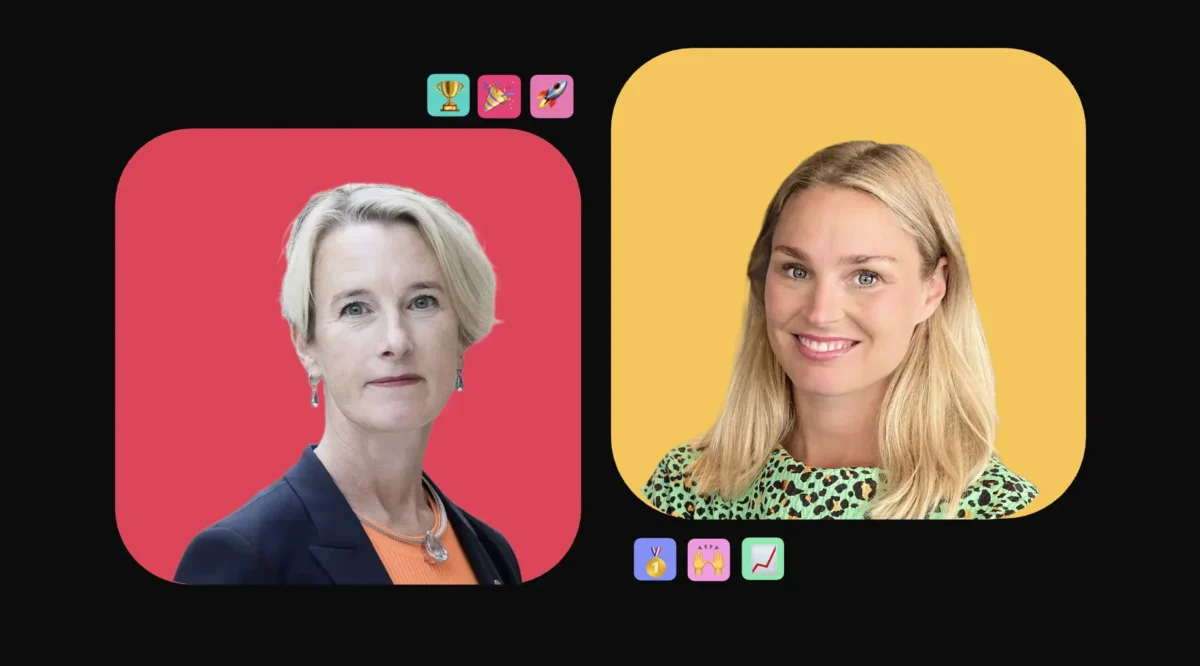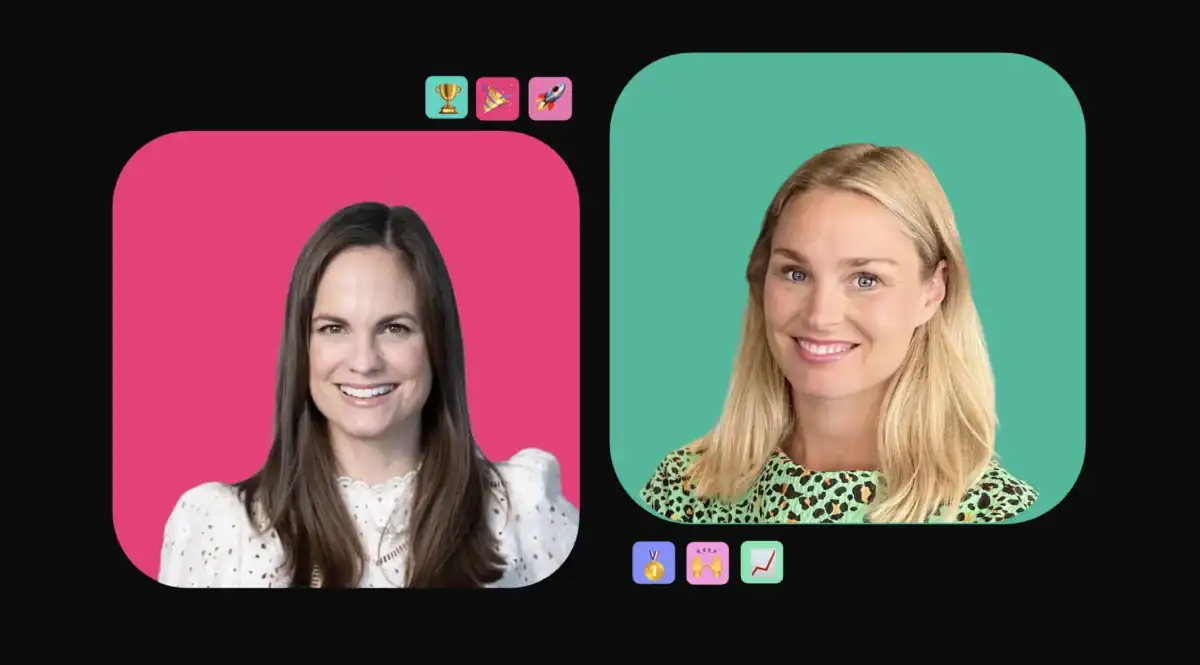

Welcome to Nå mål, today I’m joined by Sofia Alexus, CEO of Verified. We talk about her first period as CEO, how she quickly introduced quarterly goals in the organisation, and how to bring people together around a shared direction that creates engagement, drives follow-up and actually delivers results.
Sofia, a very warm welcome to Nå mål, who are you?
Thank you so much, Sophie It’s wonderful to be here. I’m the CEO of Verified, and I’ve been there since January 2026. Verified is a regtech company that helps businesses manage regulatory complexity, especially within e-signing, AML onboarding and KYC. As a person, I’m drawn to companies where things are really happening.
There is so much going on in the regulatory space right now, and I truly believe it’s an industry going through a major shift. For me, it’s important to work with companies that have a clear mission and real impact, especially as a leader. I also have around 20 years in Swedish tech behind me, including several international roles, especially in the US. So I have a long and broad international career, but today I’m very focused on what I’m doing here and now.
Which companies were you with before Verified?
I come from larger companies and spent more than twelve years at Ericsson, always in very international roles, especially with China and the US. I also lived in the US for many years. After that I joined Trustly, which was still quite a small company at the time. I was part of its entire hypergrowth journey, from around SEK 250 million in revenue when I joined to about SEK 2.5 billion when I left, in just 4.5 years. It was an amazing journey.
Most recently, I came from Kundo, where I was CEO. There, we made a full pivot from being a more traditional customer service company to becoming an AI-native customer service company. That was also a very exciting journey.
How would you explain Verified to a 12-year-old?
Instead of signing documents manually, you can do it digitally. And instead of manually trying to get to know your customer by asking lots of questions back and forth, you can do it digitally with our solution.
What is your relationship to goals?
I’m probably a little goal-obsessed, and I think I’ve always been that way. But for me, it’s not really about perfect goals or perfect models. It’s more that I understood early on how expensive a lack of clarity is. If you’re not clear in an organisation, it costs a lot of time, a lot of energy, and a lot of motivation.
When I came in as CEO of Verified, where the founders had basically led the company up until then, it became very clear to me that I needed to help everyone understand where we were going. What do I want for Verified? What does the leadership team want? What are we working toward together? For me, that is one of the most important parts of leadership.
Why are leaders often so poor at formulating and implementing goal management?
Because it’s hard. Goal management is really about sitting down with your leadership team and being honest about what actually matters most this year, next year and the year after. It’s not about everything you want to do. It’s about daring to prioritise. Daring to say: I understand that you love your area, but it’s not what we are prioritising right now. And that’s difficult.
For me, it also comes down to giving strategic work enough time. Of course we have weekly leadership meetings, but we also have a strategy day every month. This can’t be something you do once every six months, especially not in a company that is scaling fast. It requires time, focus and courage to get to the core.
What do your strategy days look like?
We don’t just show up and talk all day. There is always an agenda. Before each strategy day, the leadership team defines a clear direction for what we need to dig into. Right now, for example, it’s a lot about our e-signing business, because we’ve been heavily focused on AML and anti-money laundering tools for a long time. Now it’s time to take the next step in another part of the business.
We bring in the right people depending on the topic. My CTO might set the agenda for one part of the day, while another part focuses on our new values and becomes more workshop-based. So the day is structured, but still dynamic.
How did you set your first quarterly goals?
Honestly, a bit too late, because it’s hard to set goals immediately when you’ve just started. But when I joined, it became very clear to me that there was no written, concrete strategy. Everyone talked about there being a direction, but when I asked where it was, it wasn’t really documented.
That made it important for me to do this properly from the start. I wanted a clear tool and a structured process, and for us that became OKR. We started top-down. I needed to get the leadership team on board first. We held strategy days, ran workshops, and worked our way toward what actually mattered most. Then I summarised it and made it even more concrete. For the year, we set three objectives with three key results under each.
We now work on a quarterly basis. The first round was launched in the middle of Q1, but then we set Q2 at the end of Q1 and launched it at the beginning of Q2. It gets better every quarter.
How do you create engagement around the goals?
I think you need to be a bit of a marketer as well. The way you formulate goals matters. If you write objectives in a way that is clear and easy to remember, they become more powerful.
For example, we have a short tagline for each objective so they are easy to remember. Then I repeat them over and over again: at town halls, group meetings and one-to-ones. They need to be repeated until they become part of the operational language. Now I genuinely think that almost anyone in the company could answer what our objectives for the year are. I think that’s very strong.
Do you help formulate goals at team level too?
Yes, especially in the beginning. For Q1, the leaders created their goals based on what we had already set at company level. Then we went through them in the leadership team and gave each other very concrete feedback. Was something too operational? Was something unclear? Did something need to be adjusted?
By Q2, it went much better. By then everyone had started to understand the format, and we had also landed on about the right number of goals at team level. The first time required a lot of hands-on support, but now it’s starting to stick.
Have you encountered any resistance?
Actually, not that much. Quite the opposite. When we set goals for the commercial team ahead of Q2, we first ran a workshop where the whole team could participate. We looked back at the quarter, reviewed the data, talked about what had gone well, what had been difficult, and what we needed to improve. Then I took that input and formulated objectives based on it. That created a lot of engagement. Many people said they had never felt so heard or so included before. Simply letting people be involved creates buy-in.
Why do so many companies fail with OKRs or goal management?
I think many make it too big from the start. It became very trendy to roll out OKR everywhere a few years ago, and then it often turned into something where everything had to happen at once. The whole organisation had to be trained at the same time, everyone had to use it at once, and it became too much. I believe much more in an iterative approach. The leadership team has to be truly comfortable first. Let it be the leadership team’s baby for a while. Let them own it. Then the next layer can come in.
We still don’t have everything perfectly implemented, and that’s okay. We are learning. The recipe for failure is trying to make everything perfect from day one.
It also sounds like you really follow through. How important is discipline?
It’s absolutely critical. This is a major investment of time for a company, so you also need to know why you’re doing it. If you’re not conscious of why you’re introducing this way of working, you won’t have the discipline to stick with it. That’s why it was important to me that we didn’t set goals annually and then only look at them in Q4. We work quarterly, and that means there need to be meetings, structures and a governance model that support that.
We’ve already built it into our rhythm. There are forums for follow-up, it’s part of my one-to-ones, and we have even started connecting it to some commission models. That makes it part of the company’s backbone.
How do you distinguish quarterly goals from operational work?
I actually think it’s a relief that you don’t have to squeeze everything into the same place. That’s also a risk, trying to put all KPIs, all goals and all follow-up into the same model. For me, objectives should be about movement. They should describe something that moves us forward. Then we have KPIs that measure the daily operational reality, such as activity, booked meetings or other outcomes. KPIs measure whether operations are working. Objectives describe the bigger shift we want to create. That’s exactly what we challenge each other on in the leadership team: is this just something you would have done anyway in your everyday work, or is it actually a real shift?
How do you think about result reporting? What happens if you only reach 55 percent?
If you reach 130 percent, I almost think the goals were too easy. There is something aspirational in the very word “objective.” It is something you really want to achieve. If we reach 80 or 90 percent, we have often still made a major shift. Then we probably haven’t failed.
I also don’t think you should always carry everything forward between quarters. If something was designed to take two quarters, fine. But sometimes it turns out that it wasn’t the exact key result you expected that created the shift. And that is also okay. If, on the other hand, we don’t reach anything at all, then we’ve failed in how we set the goals and need to adjust for the next quarter.
It can be hard to know why you didn’t get all the way there. How do you think about that?
It’s a great opportunity to learn. When we set the next quarter, we always do a retrospective. We look back at previous goals and ask: why didn’t we get all the way there? What happened? Were we too ambitious? Was the market against us? Or did we simply not have the capacity to drive that many strategic initiatives at the same time? The answer to why we didn’t succeed often contains the focus for the next quarter. So first and foremost, it’s not a failure. It’s a learning opportunity.
This really is a process over time. Do you have any personal goals as well?
Yes, absolutely. At home, we are two CEOs, so our need for planning is pretty high. For example, we have shared goals related to the house and the garden. What do we want to do this year? Do we want to renovate, repaint or improve something in the garden? We set direction and priorities there too.
For me personally, health is very important. I work out three times a week, both to stay strong and to have the energy to keep going. That is a very clear goal for me, and I have actually blocked it in my calendar. I come in later on certain mornings in order to make time for training.
I believe a lot in that. If you have already decided, you don’t have to think about it every day. You already know what applies. And it’s actually the same in organisations. When people know where they are going, you can create much more autonomous teams. Then I, as CEO, don’t need to be involved in everything. For me, goal management is also a way to avoid micromanagement.
Great final words there, Sofia. Goal management as a way to avoid becoming a micromanager.
Yes, exactly.
A big thank you for joining Nå mål.
Thank you so much, Sophie.