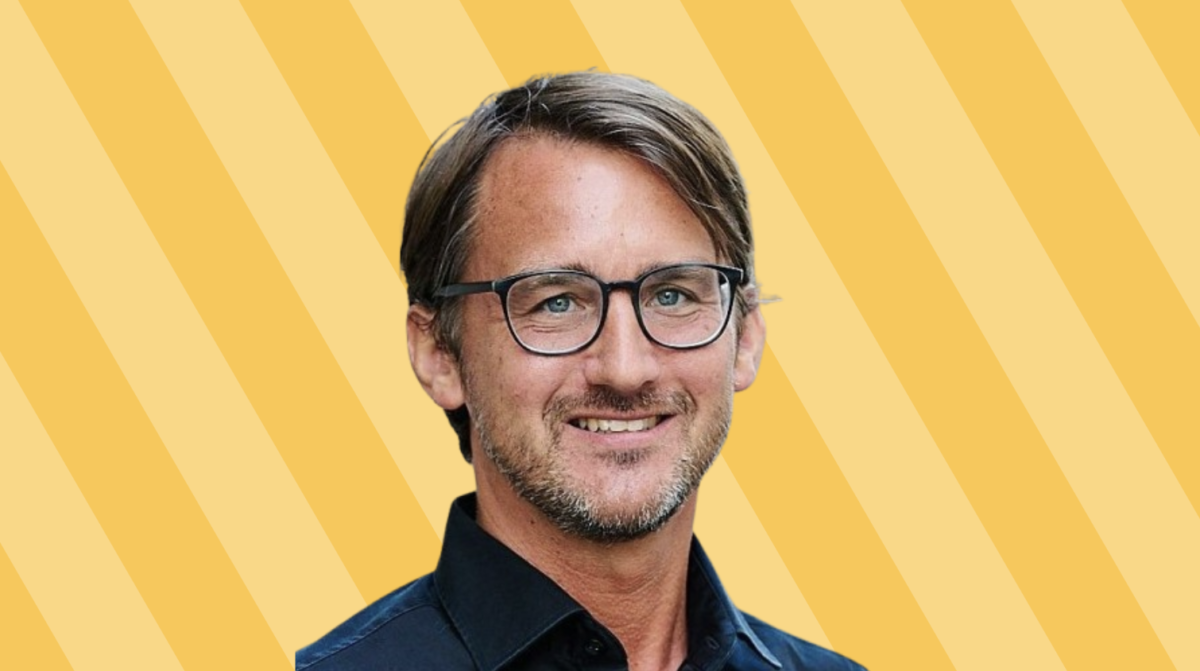

Jan Pfister is an Associate Professor of Management Accounting at the University of Turku and an affiliated researcher at the House of Sustainable Society at the Stockholm School of Economics. His research focuses on performance measurement, management control systems and prosocial approaches to organizational performance. In this interview, Jan Pfister explains how goals shape behavior, why some teams perform better than others and how leaders can build organizations that support both performance and employee well-being.
Jan Pfister, who are you and what do you research?
I am an Associate Professor of Management Accounting at the University of Turku and an affiliated researcher at the House of Sustainable Society at the Stockholm School of Economics.
I am originally from Switzerland and have previously worked at Lancaster University in the UK. I have also spent time at UC Berkeley in the United States.
My research focuses on human behavior in organizations. I am particularly interested in how organizations can create conditions where people flourish, express themselves and contribute effectively. These conditions can look different depending on whether the organization operates in the private or public sector.
What is your relationship with organizational goals?
Goals have been an important part of my research for many years. One example is a long-term study of the finance department in a large American technology company. The organization introduced stretch targets aimed at improving efficiency by 20–30 percent each year. We studied the conditions that allowed employees to work toward these ambitious goals.
Using self-determination theory, we found that people can achieve demanding targets when they feel competent, connected to others and sufficiently autonomous. This remains important even when employees are working under significant performance pressure. Goals also provide direction. A strong organizational mission can inspire people, while clear team and individual objectives help translate strategy into everyday work.
How well do organizations work with goals today?
It varies considerably between organizations.
High-performing organizations are often good at creating a mission that employees understand and want to support. People know why their work matters and how it contributes to a shared purpose. Other organizations struggle with unclear goals or low commitment. Even when goals are ambitious, employees may not feel connected to them.
Leaders must also establish boundaries. Ambitious targets can motivate people, but they can also create a culture where employees feel expected to work constantly. Strong leadership means encouraging high performance while protecting a sustainable balance between work and personal life.
Where does goal setting usually go wrong?
Leadership commitment is one of the most important factors. It is not enough to introduce a new goal-management system. Leaders must believe in the system and involve employees in developing the goals.
The difficulty of a target matters less than the level of commitment behind it. Whether an organization uses top-down or bottom-up goal setting, people need to understand the shared purpose. Goal setting often fails when employees become focused on compliance. They complete tasks because they have been told to do so, rather than because they understand or support the objective.
What is a prosocial group?
A prosocial group is one in which people work with others, for the group and toward a shared purpose. Prosocial behavior does not simply mean charity work or helping outside normal job responsibilities. It means placing some personal interests aside to support the team and its common goals.
People must also feel safe enough to contribute fully. Employees may hesitate to act prosocially if they believe others will exploit their efforts. In a strong prosocial group, members trust that their colleagues are also contributing. When someone acts against the group’s purpose, the team has mechanisms for addressing the problem and realigning everyone around the shared mission.
Why did you begin researching prosocial organizations?
My interest developed through several organizational studies. In successful technology companies, I repeatedly saw the importance of managing personal interests and keeping individual egos under control. In contrast, I studied an Italian construction company where two senior leaders were in conflict. Their disagreement spread through the organization and affected relationships at multiple levels.
These examples showed how excessive self-interest, internal competition and antisocial behavior can damage organizational performance.I therefore became interested in the opposite: prosocial behavior.
Evolutionary research suggests that groups built around cooperation can outperform groups dominated by self-interest. When ten people work together effectively, they normally achieve more than a group where some members primarily protect their own interests.
This research has since developed into a larger initiative involving around 20 scholars studying prosocial performance in both private and public organizations. The work has also received significant funding from the Research Council of Finland.
Do prosocial groups perform better?
In many situations, yes. Most people can recognize this from their own experience. Teams perform better when members cooperate, share information and contribute toward the same purpose. There is also support from evolutionary science. Humans have survived and developed through cooperation rather than isolation. The same principle can be applied to teams and organizations.
Management research also provides considerable evidence that team-based organization and prosocial behavior can improve performance. The work of researchers such as Adam Grant further demonstrates the value of helping, cooperation and contribution to others.
What objections do leaders have to prosocial groups?
One common misunderstanding concerns the meaning of the word “prosocial.” Some leaders associate it with charity, voluntary work or activities outside normal business operations. However, prosocial behavior occurs whenever people work effectively with and for a group.
From this perspective, prosocial behavior is not separate from economic value creation. It is one of its foundations. Another objection is that prosocial principles may work in small communities but not in large companies. Our research draws partly on the work of Nobel Prize-winning economist Elinor Ostrom, who studied how groups successfully manage shared resources.
Ostrom identified mechanisms that help groups cooperate and self-regulate. Together with insights from evolutionary scientist David Sloan Wilson, these principles can be applied to many types of groups, including business organizations.
Jan Pfister how can leaders create more prosocial teams?
The first step is to move from an “I” mindset to a “we” mindset. Leaders should consistently emphasize that performance is created together. Several organizational conditions can support this approach. Employees should feel that their contributions are recognized and that rewards are reasonably fair. They should understand what is happening in the organization and have access to relevant information.
People should also be involved in decisions that affect their work. They need to feel safe speaking up when something is wrong, including when a colleague acts against the team’s purpose. Prosocial behavior should be recognized and appreciated. Conflicts should also be addressed quickly rather than being allowed to spread through the organization.
These principles must work together. Traditional performance systems can undermine cooperation when they focus too heavily on individual results. Leaders should therefore create conditions where teams can self-regulate and where employees take shared responsibility. Over time, organizations should also redesign performance measurement systems so that they support, rather than weaken, collaboration.
How can prosocial teams help organizations reach their goals?
Prosocial teams involve employees more actively in planning and goal setting. When people identify with their group, they are more likely to contribute ideas, accept responsibility and support the final goal. They feel that they have a genuine stake in the result.Without this shared identity, employees may disengage or compete over responsibilities and resources.
Prosocial thinking can also connect organizational goals with a broader purpose. This may include serving customers, supporting colleagues or reducing environmental harm.Traditional systems often treat employees as individual performers. However, most work is relational. People depend on colleagues, customers and other stakeholders to complete their tasks.
Goal-setting systems and performance measures should reflect these relationships rather than evaluating every contribution in isolation.
What should leaders start doing differently tomorrow?
I recommend starting with the shift from “I” to “we.” This does not mean ignoring individual performance. Individual contributions should still be recognized, but they should be understood in relation to the team’s shared purpose.
Leaders should also reconsider the strong focus on efficiency and internal competition that has developed in many organizations. Instead of competing primarily to reduce costs, organizations can compete through service. This means providing better support to employees and enabling employees to provide better value to customers and society.
Resources will always be limited, but the underlying mindset matters. Effective leadership is not only about finding places to cut costs. It is also about creating the conditions that allow people to cooperate, contribute and perform sustainably.
Jan Pfister, thank you for joining Ready, Set, Goal.
Thank you. It was a pleasure.