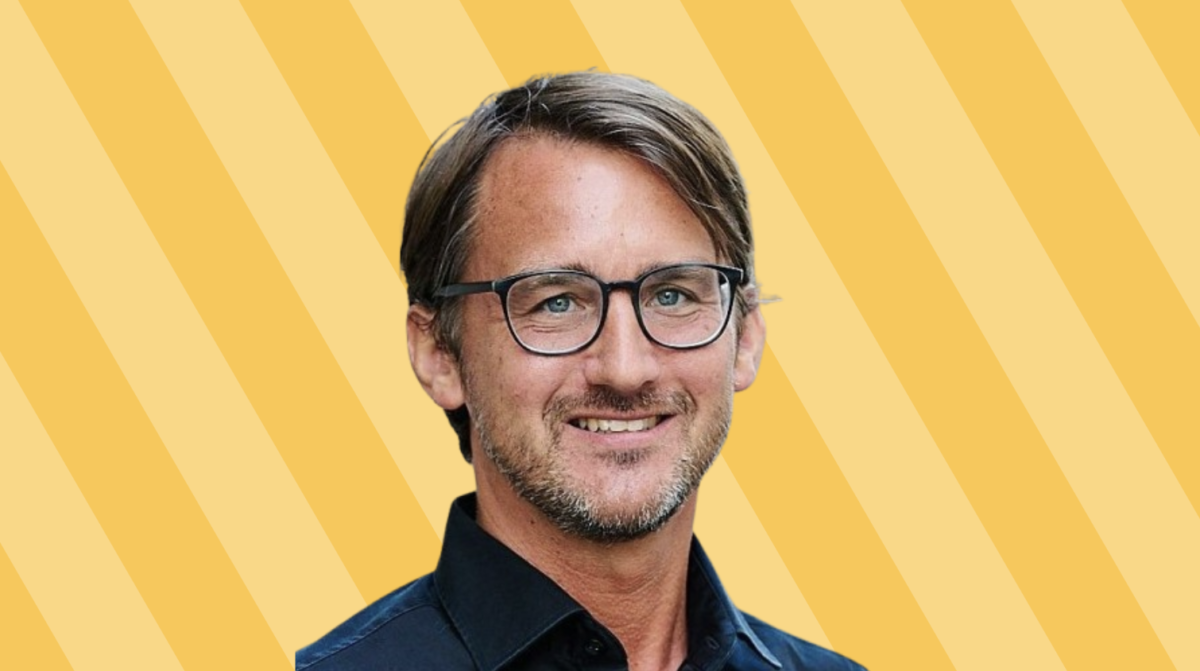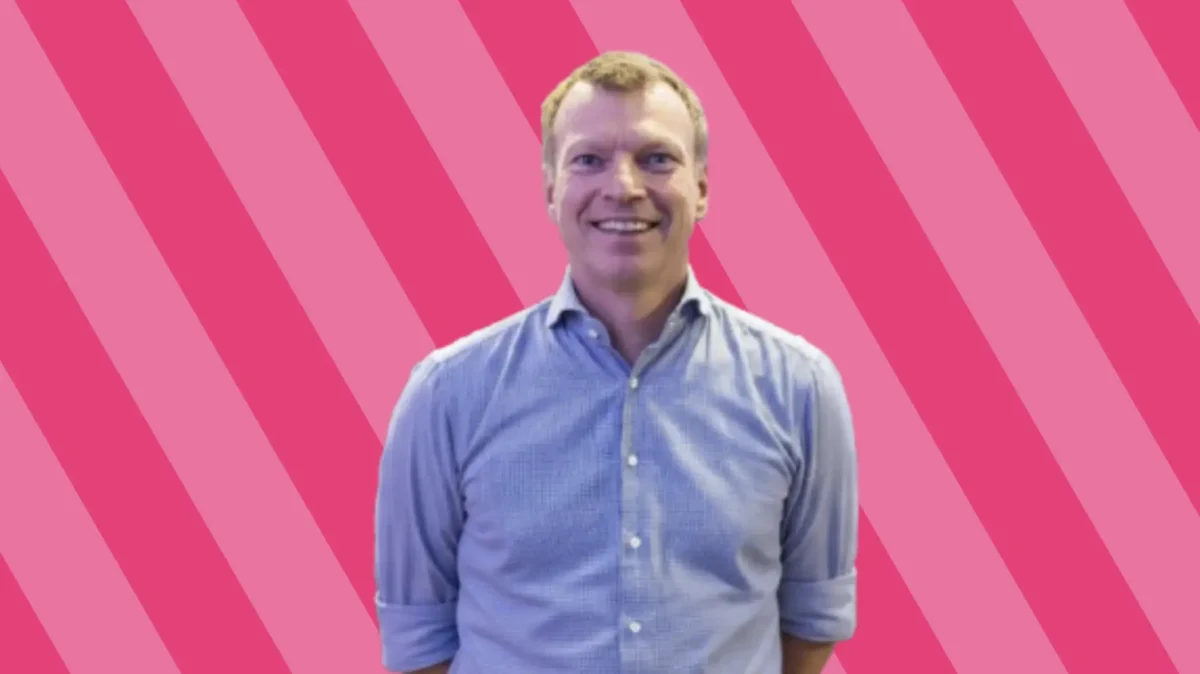

In this episode, I meet Patrik Frisk from Reju. He has a long international career and has led major brands such as Under Armour, Timberland, and ALDO Group. We talk about his journey as a leader, his relationship to goals, and how to get teams aligned.
Patrik Frisk, welcome to Nå mål. Can you tell us about yourself? I of course want to hear more about your journey, but please start by telling us: Who is Patrik?
Patrik Frisk is someone who began his life in Åkersberga outside Stockholm and who has since had a very international journey. I have worked in eleven countries and lived in twelve, from Australia and Asia to Europe, the US, and Canada.
I have worked in the textile industry for over 35 years. My path into it came early, including through W. L. Gore & Associates, where I was part of the rapid growth of high-performance materials and the outdoor segment. From there, I moved on to larger roles in both Nordic and global companies.
Before Reju, I worked with companies such as Under Armour, The North Face, Timberland, and ALDO Group. I have had the privilege of leading operations within textiles, footwear, and accessories, and of working across the entire value chain, from materials and product to distribution, retail, and e-commerce. Today, I am CEO of a chemical engineering company, which perhaps was not the most obvious destination when I started my career.
You’ve worked with major global brands and traveled widely. Now you’ve moved into textile recycling. What is your current role?
The interesting thing is that you can spend an entire career selling products and suddenly realize that those products have no home once they have been used. I remember clearly January 4, 2016, in Montreal, when I realized that the old model had reached the end of the road. In the West, new shopping centers were no longer being opened, and growth was no longer about expansion in the same way. At the same time, it became clear that the textile industry produces enormous amounts of products without a functioning circular solution.
When I later worked at Under Armour, it became even clearer to me how big the challenge around polyester was. A large portion of all textiles is thrown away or burned at the end of its lifecycle. That is neither sustainable nor a good economic model. That was where my journey toward textile recycling and the circular economy began.
Who did you connect with when you started thinking along these lines?
I asked our materials team at Under Armour to look for alternatives, and that’s when I came across IBM. It may not be the first company you think of when it comes to polymer development, but they had an innovation that made it possible to break down polyester at the molecular level and rebuild it again.
If you can do that at scale, it is something of a “holy grail” within textiles, because the mix of fibers and chemicals in today’s textiles makes recycling very difficult. We saw the potential and therefore started working together with IBM and Technip Energies. That became the foundation for what later became Reju.
But have you left Under Armour now?
Yes. When I left Under Armour in 2022, my former partners at IBM and Technip Energies asked me to continue the work of commercializing the technology. By that point, we had already moved the technology from IBM’s laboratory in California to Frankfurt, where Technip Energies had the right chemistry and polymer expertise. We also had a pilot facility there. When the decision came to build a larger demo plant, someone was needed to drive the work full-time. I chose to continue because I strongly believed in the solution and saw the long-term potential.
How far have you come now? It’s 2026.
The first major objective was to build a demo plant of 1,000 tons to prove that the technology worked at a larger scale. It was an investment of over 300 million SEK.
Before building, we also needed to understand whether the market actually existed. Therefore, we spent the beginning of 2023 analyzing both opportunities and challenges. When that work was completed, we created Reju during 2023 and began building the plant in France in September that same year. The plant was completed in the fall of 2024, which was very fast for such a complex project in Europe. We set the goal of building it in twelve months and within budget, and we achieved both. That shows what clear goals and the right capabilities can accomplish.
Was it because you set goals, or what made you succeed? Why don’t others succeed?
I believe goals only work if you also have the conditions required to achieve them. In our case, we had an unusually broad competence base: chemistry, engineering, procurement, supplier knowledge, and execution capability. At the same time, we set tight timelines and chose to work in a different way than traditional engineering. We allowed development, design, and construction to run in parallel instead of in clearly separated phases. It worked because we had both confidence in the technology and access to an organization with very strong engineering expertise. The combination of clear goals and the right resources was decisive.
Which resources would you say were most important? Did these people have other roles within Technip, or did you free up a team to work on Reju? How did you get the resources to succeed?
Normally, large engineering companies work on a project basis, where people are involved in several projects at the same time. But in Reju, we built a core team that was fully dedicated. That team could then bring in the right expertise from different parts of Technip Energies when needed. In that way, we had both focus and flexibility. This also became a new way of working. Reju became not only a company for chemical textile recycling, but also an example of how to organize rapid innovation in a large technical environment.
How do you get all employees to work in the same direction? There is a lot of collaboration, and many people need to work hard without sub-optimizing their own part. You have quite a complex operation.
It was a major leadership question. We were not only building a plant but also creating an entirely new industrial model. In that case, it is not enough for each function to optimize its own part.
We quickly saw that a lot was missing around it: collection of textile waste, sorting by fiber composition, and understanding how the material should go back into the value chain for brands, the furniture industry, and the automotive industry.
This meant we needed to bring together people from many different worlds: chemical engineers, construction experts, textile specialists, and experts in textile waste. To hold all of this together, we needed a shared steering mechanism. That is why we started working with OKR.
How do you think it works, letting OKR meet project management?
It is complex but very valuable. Project management is important for making details and deliveries work. OKR is needed to create direction and coordination across multiple parts of the business. Engineers often want very clear instructions, while OKR is more about pointing out what matters most and creating focus around the big goals. For us, it became a way for everyone to understand how their work contributes to the whole.
When we built the plant, project governance worked well. But when we simultaneously needed to handle customers, textile collection, sample production, and industrialization, it was not enough. That is when a higher-level goal management tool was needed. It took time to make it work, but today OKR is really starting to live within the organization.
How do you actually create engagement around the goals?
It has to start from the top. For us, it was initially driven mainly by me and our Chief People Officer. But engagement does not come by itself; it requires time, follow-up, and discipline. We had clear resistance in the beginning, especially from parts of the engineering organization that felt the old way already worked. But as the business became more complex, it became obvious that we needed a shared way to steer toward the same goals.
We follow up on our OKRs every month and do deeper reviews every quarter. We have also become better at sticking to a few clear objectives and key results. What you follow up on is also where you get results. Without discipline, it is just a document. With discipline, it becomes a real management tool.
If you were to do the implementation again, what would you do differently?
I actually do not think I would do anything differently. From the beginning, we knew this would be a journey and that it would take time. You cannot implement OKR through a course and then think it is done. You need to create rhythm, structure, and a system for follow-up. The tool works best when it is kept alive and updated. It also requires clear support from leadership. If leadership does not believe in it and actively work with it, it will not work in the organization. You need to see it over time to truly believe in it.
Yes, that is true. You need to see that it works in practice and become comfortable with the way of working over time. What I also hear is that you have had a very proactive leadership style. You have followed up, maintained discipline, checked in, and kept the goals under close review. There are many leaders out there who are also good leaders but may focus more on other things. How large a part of leadership is goal management?
For me, goal management is closely linked to strategy. How large a part it is depends on the organization, but in a rapidly evolving business, it becomes a very large part. In my case, strategy and goal management are a central part of the job, together with people-related matters. I review our overall OKR structure every month and track how the leadership team is performing. It is not about micromanaging everything, but about knowing where to look. I focus primarily on what is red, not what is already green. That is where leadership makes the biggest difference.
Final question. If you could give one single piece of advice to a CEO implementing OKR in 2026, what would it be?
Persistence.
Good, it can hardly be clearer than that. One word, and you have to reflect on what it means and break it down yourself.
Very good.
Thank you very much, Patrik Frisk, for joining Nå mål!
Thank you, Sophie.